
Table of Contents
ToggleParts of Sunglasses Explained
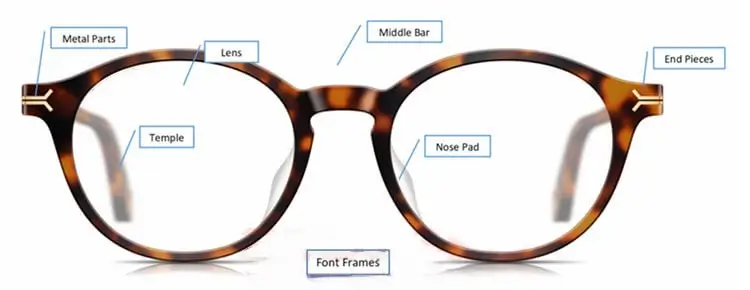
The main parts of sunglasses are the frame front, lenses, bridge, nose pads, hinges, temples, temple tips, screws and rim or rimlock. Each component affects how the sunglasses fit, how durable they are, how the lenses stay in place, and how the final product looks after manufacturing.
For eyewear brands and private label projects, understanding sunglasses components is useful before starting a custom sunglasses design. A small detail such as hinge position, temple curve, bridge width or lens groove depth can affect comfort, production accuracy and long-term quality.
Main Parts of Sunglasses
The table below summarizes the most common sunglasses parts, their alternative names, their basic function and why they matter in eyewear manufacturing.
| Part | Also Called | Function | Manufacturing Note |
|---|---|---|---|
| Frame Front | Front frame, frame body | Holds the lenses and defines the shape of the sunglasses. | Needs accurate lens openings, bridge width and front curve. |
| Lenses | Sunglass lenses, tinted lenses | Protect the eyes from sunlight, glare and UV exposure. | Lens size, curve, tint and edge shape must match the frame groove. |
| Bridge | Nose bridge | Connects the two lens areas and supports the frame on the nose. | Bridge width affects comfort, balance and wearing position. |
| Nose Pads | Pad arms, nose supports | Improve comfort and help prevent the sunglasses from slipping. | Can be integrated, welded, adjustable or silicone depending on the frame. |
| Hinges | Joints | Connect the frame front to the temples and allow folding. | Hinge position and screw accuracy affect durability and opening feel. |
| Temples | Arms, side pieces | Extend from the hinges to the ears to hold the sunglasses in place. | Temple length, curve and material affect fit and stability. |
| Temple Tips | End tips, earpieces | Rest behind the ears and improve wearing comfort. | Shape and material influence pressure, grip and long-term comfort. |
| Screws | Hinge screws | Secure hinges, rimlocks and other small hardware. | Screw tightness and material choice affect long-term stability. |
| Rim or Rimlock | Lens rim, eyewire lock | Holds lenses in place, especially in metal full-rim frames. | Important for lens security, alignment and assembly precision. |
Frame Front
The frame front is the main body of the sunglasses. It holds the lenses, connects to the bridge and end pieces, and defines the overall shape of the eyewear. In full-rim sunglasses, the frame front surrounds the lenses completely. In semi-rimless or rimless designs, the structure may be lighter and more minimal.
For custom sunglasses, the frame front is one of the most important design areas. Its shape, thickness, curve and lens opening determine the appearance of the product and also affect production accuracy. If the lens opening is not accurate, the lenses may not fit securely or may create stress during assembly.
Common Frame Front Materials
- Acetate: Often used for premium fashion sunglasses because it offers rich colors, patterns and a polished surface.
- TR90: Lightweight and flexible, often used for sports or active eyewear.
- Metal: Suitable for slim, refined and durable sunglass designs.
- Titanium: Lightweight, corrosion-resistant and commonly used for premium eyewear.
In OEM sunglasses manufacturing, the factory checks the frame front shape, lens groove, bridge size, front curve and end piece structure before production. These details help keep the approved sample and bulk production consistent.
Rim in Sunglasses
The rim of sunglasses, also referred to as the frame or bezel, is the part that surrounds and holds the lenses in place. It provides structural support, ensuring the lenses are securely attached to the temples and bridge. The rim also contributes to the overall aesthetic and style of the sunglasses, defining their shape and appearance. In addition to its structural role, the rim can enhance the durability and protection of the lenses.

Types of Rims
Full-Rim
- Description: The lenses are completely enclosed by the frame.
- Benefits: Offers maximum protection for the lenses, preventing damage from impact and wear.
- Best For: Everyday wear, sports, and activities where durability is crucial.
Half-Rim (Semi-Rimless)
- Description: The frame partially encloses the lenses, usually along the top.
- Benefits: Provides a lighter and more modern look while still offering some lens protection.
- Best For: Casual and fashion-forward wear, where a balance of style and function is desired.
Rimless
- Description: The lenses are attached directly to the temples and bridge without an enclosing frame.
- Benefits: Offers a minimalist and lightweight design with an unobstructed field of vision.
- Best For: Lightweight and understated styles, ideal for those seeking comfort and a sleek appearance.
Rimlock
Rimlock, also known as eyewire lock, is a component in full frame metal sunglasses. It is a small mechanism, typically located at the bottom or side of the rim, designed to secure the lenses within the frame. The primary purpose of the rimlock is to ensure that the lenses stay firmly in place, providing stability and preventing them from falling out or shifting.

End Piece
The end piece of sunglasses, also known as the temple end piece or hinge end, is the component that connects the frame front to the temples (arms). It is a crucial part of the sunglasses’ structure, playing a vital role in ensuring stability, durability, and comfort. The end piece houses the hinge mechanism that allows the temples to open and close, and it provides a secure attachment point between the frame and the temples.

Lenses
Lenses are the most visible functional part of sunglasses. They protect the eyes from sunlight, reduce glare and improve visual comfort in bright outdoor conditions. Depending on the project, sunglass lenses can be tinted, gradient, polarized, mirrored or treated with UV protection.
For manufacturing, lens shape and lens curve must match the frame structure. The lens edge needs to fit into the frame groove accurately. If the lens is too loose, it may move inside the frame. If it is too tight, it may create pressure and cause fitting problems.
Common Sunglass Lens Options
- Tinted lenses: Used for general sun protection and fashion styling.
- Gradient lenses: Darker at the top and lighter at the bottom for a softer visual effect.
- Polarized lenses: Help reduce reflected glare from roads, water and bright surfaces.
- UV protection lenses: Designed to protect the eyes from harmful ultraviolet exposure.
- Mirror lenses: Add a reflective coating for stronger visual impact and outdoor use.
For private label sunglasses, lens color, coating, thickness and logo position should be confirmed before sampling. These details affect both product appearance and quotation.

Nose Pads in Sunglasses
Nose pads are integral components of sunglasses that contribute significantly to comfort and fit. Their primary role is to distribute the weight of the sunglasses evenly on the nose bridge, reducing pressure points and preventing discomfort during extended wear. Properly positioned nose pads also help ensure that the sunglasses sit securely on the face without slipping.

Different Materials Used for Nose Pads
Plastic
- Characteristics: Lightweight and often integrated into the frame material.
- Benefits: Seamless appearance and can be more adjustable compared to other materials.
- Best For: Fashion sunglasses and styles where aesthetics are a priority.
Rubber
- Characteristics: Durable and provides good grip.
- Benefits: Offers stability and prevents slippage, especially during physical activities.
- Best For: Sports sunglasses and active lifestyles where secure fit is essential.
Silicone
- Characteristics: Soft, flexible, and hypoallergenic.
- Benefits: Provides a comfortable fit and conforms well to the shape of the nose bridge.
- Best For: Individuals with sensitive skin or those seeking maximum comfort
Importance in Reducing Pressure and Preventing Slippage
Reducing Pressure:
- Properly fitted nose pads distribute the weight of the sunglasses evenly, reducing pressure on the nose bridge and preventing discomfort, headaches, or marks.
Preventing Slippage:
- Grippy materials like rubber ensure that sunglasses stay securely in place during activities, pre
Nose Pad Arm
The nose pad arm, also known as the nose pad holder or pad arm, is a small component that connects the nose pads to the frame of the sunglasses. It plays a crucial role in positioning the nose pads so that they rest comfortably on the wearer’s nose, providing support and stability for the sunglasses. The nose pad arm allows for adjustments to ensure a proper fit, enhancing both comfort and the overall wearing experience.

Temples (Arms) in Sunglasses
Temples, also known as arms or temple arms, play a crucial role in securing sunglasses on the wearer’s face. Their primary function is to extend from the hinges of the frame to the ears, providing stability and preventing the sunglasses from sliding down or falling off. Temples distribute the weight of the sunglasses evenly across the sides of the head, enhancing comfort during prolonged wear.

Materials and Styles of Temples
Materials
- Plastic: Lightweight and available in various colors and finishes. Common in fashion-forward and casual sunglasses.
- Metal: Durable and often used in premium sunglasses for a sleek and sophisticated look.
- Acetate: Offers a combination of durability and flexibility, known for its glossy finish and vibrant color options.
- Titanium: Extremely lightweight, hypoallergenic, and corrosion-resistant, ideal for high-end sunglasses.
Styles
- Regular (Straight) Temples: Standard design that extends straight back from the frame to the ear.
- Curved Temples: Contoured to fit the shape of the head, providing a more secure fit and reducing pressure points.
- Wraparound Temples: Curved and wrap around the head for a snug fit, often used in sports and active sunglasses.
Hinges in Sunglasses
Hinges in sunglasses serve the essential function of connecting the temples (arms) to the frame, allowing for movement and adjustment. They enable the temples to fold inward for compact storage and unfold outward to comfortably fit on the wearer’s head. Hinges also contribute to the overall durability and flexibility of the sunglasses, ensuring they can withstand repeated opening and closing without loosening or breaking.

Types of Hinges
Standard Hinges
- Function: Basic hinges that allow the temples to pivot open and closed.
- Characteristics: Simple and straightforward design, commonly found in most sunglasses.
Spring-Loaded Hinges
- Function: Incorporate a spring mechanism that provides tension when opening and closing the temples.
- Benefits: Offer a snug fit and reduce the risk of stretching or warping the temples over time.
- Best For: Active lifestyles or individuals who frequently fold and unfold their sunglasses.
Barrel Hinges
- Function: Utilize a barrel-shaped mechanism that connects the temple to the frame.
- Characteristics: Provide smooth movement and durability, often found in higher-quality sunglasses.
Bridge
The bridge is the part of the sunglasses that connects the two lens areas and sits above the nose. It plays an important role in fit, comfort and balance. A bridge that is too narrow may create pressure on the nose, while a bridge that is too wide may cause the sunglasses to slide down.
Bridge design is especially important when developing custom sunglasses for different markets. Nose shape, frame weight, lens size and material choice all affect how the bridge should be designed.
Common Bridge Types
- Keyhole bridge: Often used in classic acetate frames and gives the sunglasses a vintage appearance.
- Saddle bridge: Spreads weight more evenly across the nose and is common in many plastic and acetate frames.
- Adjustable bridge with nose pads: Often used in metal sunglasses where fit adjustment is needed.
From a production point of view, bridge width, front curve and lens distance must be controlled carefully. These measurements affect both the look of the frame and the final wearing position.

Sunglasses Temple Tip
Temple tips, also known as end tips or earpieces, are the parts of sunglasses that cover the ends of the temples (arms) where they rest behind the ears. Their primary purpose is to enhance comfort by providing a soft and ergonomic surface that reduces pressure on the ears. End tips also play a crucial role in preventing slippage, ensuring that sunglasses stay securely in place during activities and movements.

Materials Used for Temple Tips
Silicone
- Characteristics: Soft, flexible, and hypoallergenic.
- Benefits: Provides a comfortable and secure grip behind the ears, even during prolonged wear.
- Best For: Individuals with sensitive skin or those seeking maximum comfort.
Rubber
- Characteristics: Durable and provides excellent grip.
- Benefits: Offers stability and prevents slippage, especially during active use or sports.
- Best For: Sports sunglasses and outdoor activities where a secure fit is essential.
Acetate
- Characteristics: Offers a blend of durability and flexibility.
- Benefits: Integrates seamlessly with the overall frame design, contributing to both comfort and aesthetic appeal.
- Best For: Fashion-forward sunglasses and styles where a cohesive look is desired.
Why Sunglasses Parts Matter in Custom Manufacturing
When a brand develops custom sunglasses, each component needs to be reviewed before sampling and bulk production. The frame shape, lens curve, hinge position, temple length, bridge width, nose pad structure and logo placement all affect the final result.
For example, acetate sunglasses require accurate frame carving, polishing and lens groove control. Metal sunglasses need precise rimlock, soldering, hinge and nose pad assembly. TR90 sunglasses require attention to flexibility, mold accuracy and fit stability. These details are not only design choices; they are production decisions.
Baooda supports OEM and ODM sunglasses manufacturing for eyewear brands, distributors and private label businesses. You can send a sketch, reference sample, technical drawing or product idea for production review.
When these components need to be adjusted for a brand project, a custom sunglasses manufacturer can help review frame structure, lens fitting, hinge position, temple length, nose pads, logo placement and packaging before sample development.
Custom Sunglasses Component Options
For OEM and private label sunglasses projects, Baooda can support different customization options depending on material, structure, order quantity and brand positioning.
| Component | Customization Options | Common Use |
|---|---|---|
| Frame Front | Acetate, metal, titanium, TR90, custom shape, custom color | Brand style, product positioning, target market |
| Lenses | Tinted, gradient, polarized, UV protection, mirror coating | Function, outdoor use, fashion design |
| Temples | Custom length, logo printing, laser engraving, metal logo | Branding and fit adjustment |
| Hinges | Standard hinges, spring hinges, different hardware finishes | Durability, comfort and opening feel |
| Nose Pads | Integrated pads, silicone pads, adjustable pad arms | Comfort and fit for different nose shapes |
| Packaging | Custom case, pouch, microfiber cloth, card, box and carton | Private label presentation and retail packaging |
Need Custom Sunglasses Components for Your Brand?
Send your frame idea, reference sample, logo requirement, lens option and target quantity. Baooda can review the production feasibility and suggest a suitable OEM manufacturing approach.
FAQ About Parts of Sunglasses
What are the main parts of sunglasses?
The main parts of sunglasses are the frame front, lenses, bridge, nose pads, hinges, temples, temple tips, screws and rim or rimlock. These components work together to control fit, comfort, durability and appearance.
What are the sides of sunglasses called?
The sides of sunglasses are called temples. Some people also call them arms or side pieces. Temples connect to the frame front through hinges and extend toward the ears to hold the sunglasses in place.
What is the bridge on sunglasses?
The bridge is the part between the two lens areas that sits above the nose. It affects comfort, balance and how high or low the sunglasses sit on the face.
What are sunglasses hinges used for?
Hinges connect the frame front to the temples and allow the sunglasses to open and close. Hinge quality affects durability, temple alignment and the overall wearing experience.
Why are nose pads important?
Nose pads help support the sunglasses on the nose, improve comfort and reduce slipping. They can be integrated into the frame or made as adjustable silicone pads, depending on the frame material and design.
Can sunglasses components be customized?
Yes. For OEM and private label sunglasses, components such as frame material, lens color, temple logo, hinges, nose pads and packaging can be customized according to the brand’s design and production requirements.
Send Your Sunglasses Design for Component Review
If you are developing a custom sunglasses collection, send us your sketch, reference sample, material preference, logo position, lens requirement and estimated quantity. Baooda will review the frame structure, components and production feasibility before sampling.
- Frame material review: acetate, metal, titanium or TR90
- Lens, hinge, temple and nose pad suggestions
- Logo and packaging customization options
- Sample development before bulk production